How Korean Businesses Are Using Card Payments for Rent, Fees, and Labor Costs
Managing monthly cash flow is one of the most persistent challenges for small business owners and renters alike in South Korea. From monthly rent to building management fees and staff wages, many of these recurring expenses have traditionally required bank transfers or cash payments. That is starting to change. A growing number of payment platforms now let individuals and businesses settle these obligations using credit or debit cards, offering more flexibility and breathing room when funds are tight.
The Problem With Cash-Only Recurring Payments
For most of the past few decades, paying rent or staff wages in Korea meant keeping a specific amount of cash ready in a bank account on a fixed date each month. There was no room to delay, no way to earn card points, and no option to spread costs across a billing cycle. This rigid structure put enormous pressure on small business owners, especially during slow seasons or unexpected downturns. A single bad month could create a domino effect, making it nearly impossible to cover wages on time while also keeping up with rent and building fees.
The rise of card-based payment services for these categories is directly addressing that gap. Instead of scrambling to move cash around, users can now charge these expenses to a credit card and settle the balance on their card’s billing date, gaining anywhere from two to six weeks of additional financial flexibility.
Monthly Rent Payments by Card
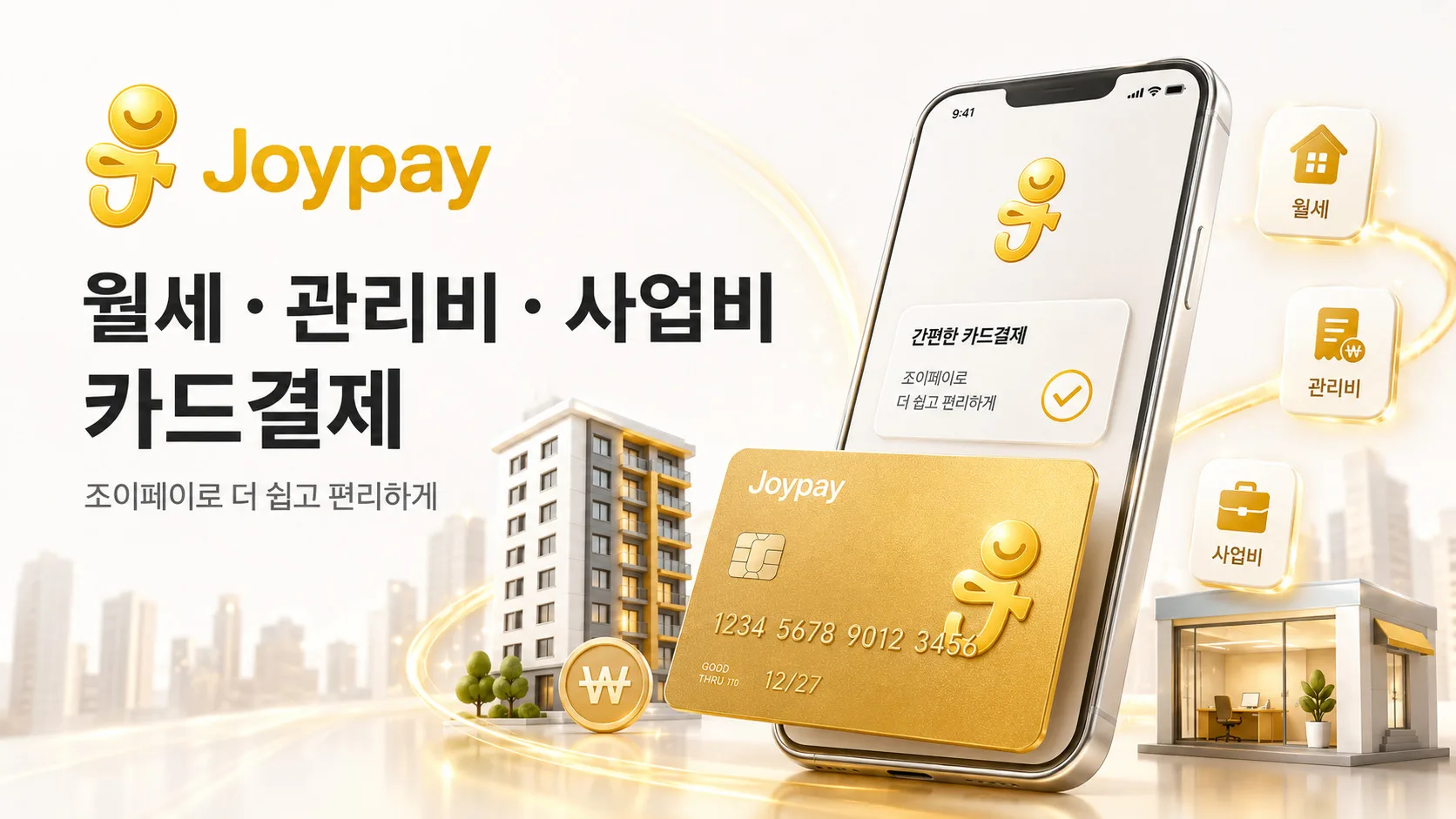
Paying monthly rent by card — known in Korean as 월세 카드결제 — allows tenants to use a credit or debit card to cover what was previously a bank-transfer-only transaction. The payment platform acts as an intermediary, collecting the card payment from the tenant and forwarding the equivalent amount to the landlord’s account. The landlord receives their money on time and in full, while the tenant benefits from the card’s billing cycle and any applicable rewards or points.
This approach is particularly useful for freelancers, sole proprietors, and young renters who may have irregular income but a reliable credit line. Rather than timing a wire transfer to a specific date, they can charge the rent to a card and manage the repayment within their normal monthly budget cycle.
Building and Management Fee Payments
Apartment complexes and officetel buildings in Korea issue monthly management fee bills that cover shared utilities, elevator maintenance, security, and cleaning services. These bills, called 관리비, have historically been paid via bank transfer or automatic debit. Card payment services now allow residents to route these bills through a card instead, which again opens up the billing cycle buffer and lets users accumulate card points on what would otherwise be a reward-free expense.
For residents managing multiple properties or running a home-based operation, being able to consolidate management fees onto a single card statement simplifies bookkeeping considerably.
Labor Cost Settlements via Card
One of the more innovative applications of this payment model is in covering staff wages, part-time worker pay, and service contractor fees using a credit card. This is where 인건비카드결제 becomes especially relevant for small business owners. Instead of needing liquid cash on payday, a business owner can charge the labor costs to a card through a payment agency, which then processes the actual bank transfer to the workers. The business gets the breathing room of the card cycle; the workers get paid on time.
This model is not about avoiding payment — it is about timing. A restaurant owner waiting on a large catering invoice, or a retailer whose sales are seasonal, can use this approach to ensure staff are paid without disrupting other financial obligations.
Comparing the Three Payment Categories
| Category | Korean Term | Who Benefits Most | Key Advantage |
|---|---|---|---|
| Monthly Rent | 월세 카드결제 | Tenants, freelancers | Billing cycle flexibility and card rewards |
| Management Fees | 관리비 카드결제 | Residents, property managers | Consolidated billing and point accumulation |
| Labor Costs | 인건비 카드결제 | Small business owners | Deferred cash outflow on payday obligations |
Things to Keep in Mind Before Using These Services
While the benefits are clear, there are a few practical points worth considering before switching recurring payments to a card-based system.
- Service fees typically range from one to three percent of the transaction amount, so factor this into your cost comparison against the value of the card rewards or the cash flow benefit you receive.
- Not all credit cards treat these transactions as standard purchases — some may classify them differently, which can affect points accumulation or installment eligibility, so check with your card issuer first.
- Using a card to defer labor or rent payments is a short-term cash flow tool, not a long-term solution to structural financial shortfalls — it works best when used strategically during temporary gaps.
Is This Approach Right for You?
The answer depends largely on how predictable your income is relative to your fixed monthly obligations. If you run a business with lumpy revenue cycles — project-based work, seasonal retail, or event-driven income — then having the ability to charge rent and wages to a card and pay the balance when revenue arrives can be genuinely stabilizing. For individuals, the card rewards alone may justify the switch, particularly on higher rent amounts where even a one percent cashback adds up meaningfully over a year.
Ultimately, these card payment services for rent, management fees, and labor costs represent a practical evolution in how Korean households and businesses manage their most predictable but often most pressured financial obligations. Used thoughtfully, they offer real flexibility without adding unnecessary complexity to your finances.